







Note: This e-newsletter was sent to Sen. Leonard Christian’s subscribers Sept. 11, 2026. To subscribe to Sen. Christian’s e-newsletters, click here.
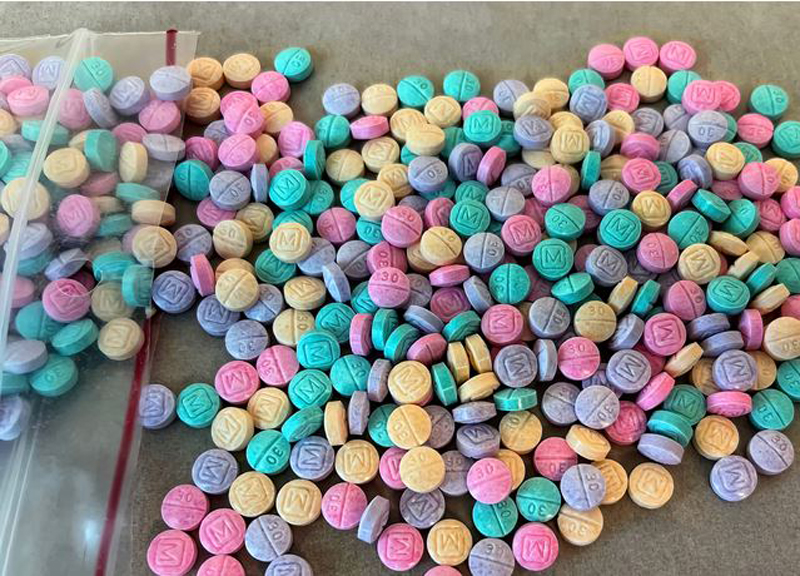
As any parent can tell you, whatever fits in a toddler’s mouth will probably wind up there when nobody is looking. That’s one reason candy-colored fentanyl pills are proving a deadly hazard in Washington state. Another reason is a state law that forces social workers to turn a blind eye to drugs in the home. Photo/ Drug Enforcement Administration
Dear Friends and Neighbors,
 A tragedy in Seattle is calling attention to a state law so awful that local governments are taking action, because the Legislature will not.
In a South Seattle apartment last month, fentanyl addict Divina Tangalan, 39, fell asleep on the sofa with her one-year-old son. When she woke up, the infant was limp and had stopped breathing. He’d gotten into her stash. He was pronounced dead at the scene.
This is the all-too-predictable result of a state law forcing social workers to look the other way when parents use hard drugs. Unfortunately, our Democratic colleagues in the Legislature refuse to consider changes to the Keeping Families Together Act. Now city and county governments are stepping in where Olympia will not. We can only hope they will shame our colleagues into doing something about a very real problem that is entirely the Legislature’s fault.
A troubling law
This law, approved on a bipartisan vote in 2021 and implemented in 2023, puts a top priority on reuniting children with parents in child-protection cases. This sounds nice. Bureaucrats are boasting about the number of families that have been reconciled. They proudly report that the number of children placed with foster parents is down 14 percent.
What they aren’t mentioning is that Washington got there by relaxing its standards. Under this law, children can be removed from their parents only in cases of imminent harm. Issues like a terrible home environment or hard drugs in the household are no longer sufficient.
A rising death toll
The result is that child deaths and near-death incidents more than doubled between 2020 and 2025. Last year there were 57 such “critical incidents” in the state’s child welfare system. About half of them involved children ingesting their parents’ illegal opioids. See chart below. There were four widely reported incidents in Spokane County last year — all four kids survived, thank goodness.
In the Tangalan case, the mother’s drug use was well-known to social-services caseworkers. But they could do nothing.
And remember the Travis Decker case from last year? That wasn’t about drugs, but it illustrated the same problem. Because of the law, a judge declined to terminate the Wenatchee man’s visitation rights merely because his behavior had become erratic and his mental condition appeared to be deteriorating. Decker then took his three daughters on an outing and smothered them to death.
Remedies are thwarted
I wasn’t in the Legislature when the Keeping Families Together Act was passed, but I am among a growing number of lawmakers who say we need to do something, and pronto. Repeal is unlikely for political reasons, so since 2023 we have been trying to pass legislation criminalizing the exposure of children to synthetic opioids. Last session we passed the bill in the Senate, but Democratic leaders in the House refused to consider it.
The problem may be that this is perceived as a social justice issue. People of color and the poor have the highest rate of Child Protective Services enforcement actions. Or it may have to do with the perception that drug usage is a victimless crime and a matter of personal choice. Let me point out that none of these dead children were mature enough to make a choice. They had no chance.
Local governments take action
Yet there is hope – not in Olympia, but on the local level. County and city governments are recognizing the Legislature’s inaction and are taking matters into their own hands. In recent weeks, Lewis County, Pierce County and the city of Yakima have all passed ordinances prohibiting the exposure of children to synthetic opioids. They can’t create felonies, but they can create misdemeanors punishable by up to a year in jail. The more local governments that join in, the more likely that they will be able to bring pressure to bear on the Legislature to take action. I just wonder how many more children will have to die before that happens.
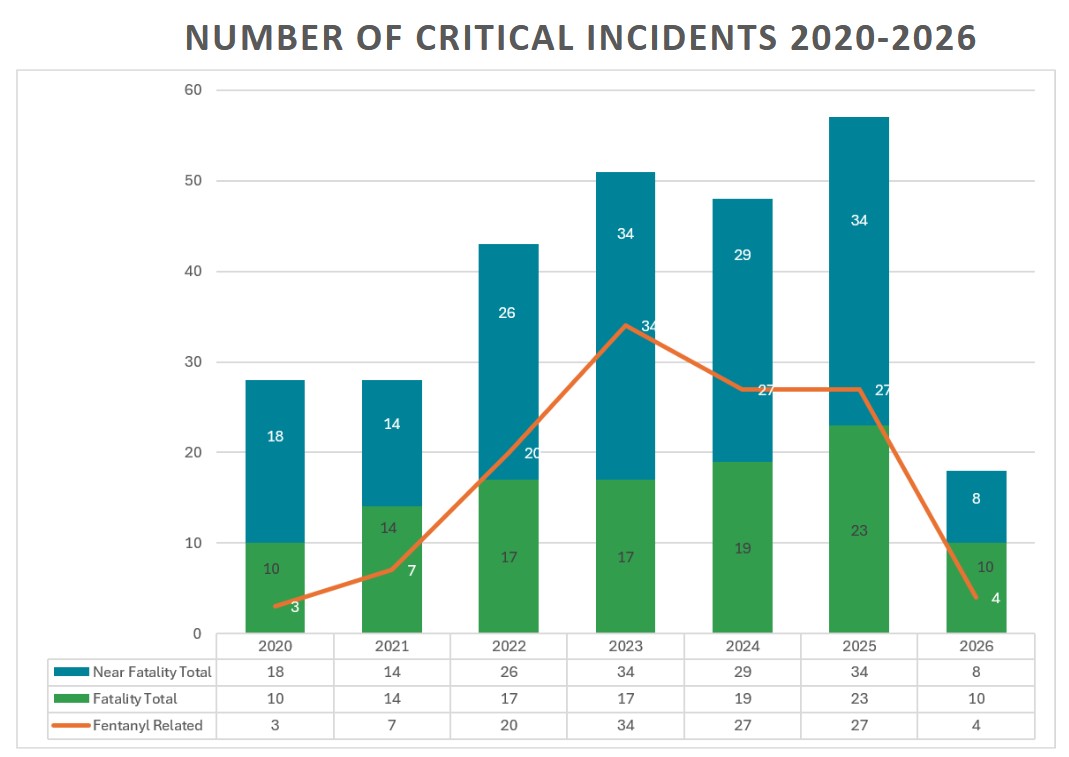
This chart from the Department of Children, Youth and Families illustrates the rising number of deaths and near-deaths in the state’s child-welfare system. Please note, the statistics for 2026 are incomplete and cover only the first two quarters of the year.
Cash grants available for victims of Spokane firestorm
Short-term assistance is available from the state for low-income victims of the recent Spokane County firestorms. The state Department of Social and Health Services is providing cash grants to victims who meet income eligibility requirements. The grants are limited to those who live in areas covered by state emergency declarations and are not currently receiving state assistance. For more information, click here.
Save the date – town hall set for December 5
We’ll be having another town hall meeting as our 2027 legislative session approaches. We’ll have plenty to talk about Dec. 5 at 1 p.m. at the CenterPlace Regional Event Center, 2426 Discovery Place in Spokane Valley. I hope you can make it! And if this seems like plenty of advance notice, you can count on me to remind you a few more times before the event takes place.
State homeless program builds on King County ‘success’
 The state Department of Commerce is celebrating the hiring of Kelly Rider as its new homelessness policy director, citing her “proven track record” as top adviser on homelessness programs to King County and as director of county human services. And what a record it is.
King County currently is in the 21st year of a ten-year program to end homelessness, and it is fair to say Rider has been a key player. Since 2005, King County has built an enormous bureaucracy that has taken care of the problem by allowing it to double.
Through its “housing first” programs, King County has spent millions creating dormitories where the homeless are permitted to continue drinking and drugging without intervention from authorities. Thanks to these policies, we witnessed a 282 percent increase in overdose deaths in King County’s permanent supportive housing projects between 2020 and 2023. And no one seems to know where all the money went. Auditors this year noted that the homelessness program was running $4 million in the red and could not account for $13 million in missing public funds.
Now Rider brings her expertise to the state level. What could possibly go wrong?
Thanks for reading,
Leonard Christian
4th Legislative District
Contact me!
If you have a comment about state government, or a concern with a state agency, I hope you will reach out to my office. The session is over, but I serve you year-round.

Mailing address: Post Office Box 40404, Olympia, WA 98504
Email: Leonard.Christian@leg.wa.gov
Phone: (360) 786-7606
Leave a message on the Legislative Hotline: 1 (800) 562-6000