






2026 Supplemental Budgets
Operating Budget
Ranking Republican on the Operating Budget: Sen. Chris Gildon, 25th LD
The operating budget funds the day-to-day services and programs that keep state government running. It pays for public schools, higher education, public safety, health care, human services, and state employee salaries — essentially the ongoing operations that serve Washington residents each year.
OVERVIEW
- In 2025 legislative Democrats approved a $12.3 billion package of tax increases (state + local) in response to a shortfall of approximately $7 billion*. The sheer size of the tax increases set a state record, yet the 2025-27 operating budget began moving toward negative territory soon after it was signed.
- As a result, lawmakers arrived in Olympia for the 2026 session facing a second self-inflicted budget shortfall. Non-partisan Senate Ways and Means Committee staff estimated the gap at $1.5 billion for the current budget cycle and $4.3 billion over the four-year budget outlook.
- Republicans believed the way to erase the shortfall was through savings and efficiencies, and forgoing needless new spending, just as we advocated in the $ave Washington budget in 2025.
- Democrats have instead passed a budget that will increase spending by $2.3 billion, or 53% more than the $1.5 billion gap.
*Tax costs and shortfall both based on four years
BY THE NUMBERS
- Spending in a biennium exceeds $80 billion for first time
- Equals an 11.4% spending increase for 2025-27 biennium compared to 2023-25
- Note: 4-yr outlook projects $81.9 billion spending level for 2027-29 biennium, which equals extraordinarily low 2.8% spending growth; historic rate of growth (15% since return of one-party rule) would equal $92 billion for 27-29 cycle
- Net policy increase for 2025-27 biennium would rise to $1.8 billion… (for 2023-25 it was $6.4 billion net increase)
- Since 2015-17, budget has more than doubled (from $38.2 billion to $80.2 billion = 110%) while WA median household income has grown by half (from $63,400 to $98,100 = 54%)
- Relies heavily on one-time money: Drains unrestricted reserves by $2.3 billion; takes $880 million from rainy-day fund; transfer $395 million in capital gains revenue from capital to operating; raids $375 million from Public Works Fund
- Suspends reality by assuming $766 million of appropriated money will NOT be spent
- K-12 funding drops to 42.2% share of budget, lower than at time of McCleary ruling in 2012 (43.4%); Higher Ed at 7.6% share, an all-time low
- Education (K-12 + Higher Ed) takes larger cut in policy funding than other areas, dropping it to less than 50% share of spending for the first time
- State spending has outpaced the growth of Washington’s median income 2 to 1
OUR POSITION
- This budget is a “House of Cards” because it is built on such a shaky foundation
- Pulls almost $4 billion from one-time sources to fund ongoing commitments
- Democrats have irresponsibly tied this to an income tax that is unconstitutional, could be overturned or defeated through initiative, or generate less revenue than they expect after wealthy people move out of state
- Do Democrats see the income tax as propping up funding commitments after one-time money runs out?
- The majority keeps talking about affordability, yet there’s no direct help in this budget
- To say it again, Washington has a spending problem, not a revenue problem
- While the drop in education’s share of the budget runs contrary to the “paramount duty” specified in the constitution, the answer is NOT to increase funding for K-12
- K-12’s share of the pie would be larger if Democrats had not made the pie so large…that’s the real issue
- Schools receive plenty of funding; what we need are better results from schools
- Focus should be on core priorities… education, health care, public safety (“educate, medicate, incarcerate”)
- This budget shows K-12 is NOT the highest priority for Democrats
- Two steps in the right direction:
- #1: Reform of Washington’s taxpayer-funded Working Connections Child Care subsidy program to save an estimated $782 million
- This is not “slashing” support, just ending wasteful practice (SB 6353 is Robinson-Gildon reform)
- Estimated savings is $782 million (from childcare reform); $128 million saved by closing Biden-era loophole
- #2: $1 billion appropriation would belatedly begin to address tort liability, WA’s fastest-growing budget issue, but it’s not enough to sustain funding for ensuing biennia
- It says a lot that the largest cost increase in this proposal is driven not by education or health care, but by the harm to Washington residents caused by agency mismanagement…torts
- Unfortunate that the executive branch was not more serious about liability before now (and D-only Senate bill aimed at adjudicating tort claims died in House… SB 6239)
- When people ask Republicans, ‘Where would you make different choices?’ let’s remember the no-new-taxes “$ave Washington” budget we proposed in 2025
Had that approach been adopted, it’s likely Washington would not be facing another shortfall today. With this operating budget, we risk ending up back in a $10 billion hole.
FLOOD RESPONSE & WATER SUPPLY
Flood response
- There is $8.6 million in funding for the Military Department to provide rental assistance and home repair and replacement for individuals recovering from the December 2025 floods.
- $3.945 million is provided for grants to counties for the removal of debris in rivers and other waterways related to the December 2025 floods.
- $2 million is provided for grants to six counties (King, Lewis, Pierce, Skagit, Snohomish and Whatcom) to evaluate the counties’ risks and needs for flood response, preparedness and prevention.
Water supply
- $12.177 million is provided for statewide water conservation projects, including:
- Kennewick Irrigation District main canal lining.
- Kittitas Reclamation District South.
- Mill Creek passage – 3rd to Colville.
- Roza Canal floor replacement.
- Roza Canal sealing project.
- Touchet River mile 42.
- Waynita Creek restoration.
- Water system efficiency leak detection and repairs.
- $7.948 million goes to local water-infrastructure projects, including:
- Algona water system improvements design.
- Alice Bay tidegate replacement.
- Bradshaw pump station modernization.
- Chehalis River irrigation project.
- Hannah Heights water supply.
- Lorenzan Creek daylighting and fish passage.
- No Name Slough tidegate replacement.
- Othello water supply.
- Oxbow Basin study.
- Port Orchard water system consolidation.
- Scatter Creek irrigation project and pipeline project.
- Skagit District 15 irrigation project.
- Skookumchuck River irrigation fish screen project.
- Skookumchuck River water conservation.
OVERVIEW
The 2026 state supplemental capital budget is $889 million and funds construction and maintenance of infrastructure around Washington. Of that total, $435.1 million is from debt-limit bonds and a net of $454.6 million is from other state and federal accounts.
•
This supplemental budget follows up the $7.5 billion 2025-27 state capital budget approved unanimously by the Legislature last year.
•
The capital budget addresses a wide range of needs throughout Washington, with funding for projects related to K-12 and higher education, water infrastructure, flood responses, housing, clean energy and more.
•
It provides strong funding to help improve water infrastructure and modernize our public schools.
•
This budget really takes a statewide approach.
AGRICULTURE & NATURAL RESOURCES
Agriculture
- $10 million is provided for cost-share agreements with dairy-farm owners for anaerobic digester development and maintenance projects.
- There is $4.636 million for grants to farmers to buy climate-smart agricultural equipment to reduce on-farm carbon emissions and increase carbon sequestration.
- $2.186 million is provided for the design of a new WSDA Plant Services Lab at the WSU campus in Prosser.
- $400,000 is funded for WSU’s soil health research infrastructure, specifically its long-term agroecological research and extension sites (LTARE):
- $300,000 to pay for two mobile greenhouse gas monitoring units.
- $100,000 to bring Othello LTARE online with construction of critical irrigation infrastructure.
Natural resources
- $3.2 million is provided to address tire-pile cleanup and prevention, including cleanup of the Twin Bridges Road tire-pile site near Richland.
- $630,000 is provided for a new welcome center and stormwater drainage improvements at Millersylvania State Park south of Olympia following flooding there.
- $3.5 million is provided for small, family-forest landowners to replace and remove stream crossing structures, such as culverts, to improve fish passage.
CAPITAL CAMPUS
- $16.46 million for Capitol Lake-Deschutes Estuary project.
- $500,000 to analyze additional security projects on the Capitol Campus.
- $345,000 for Capitol Campus window film to increase window security.
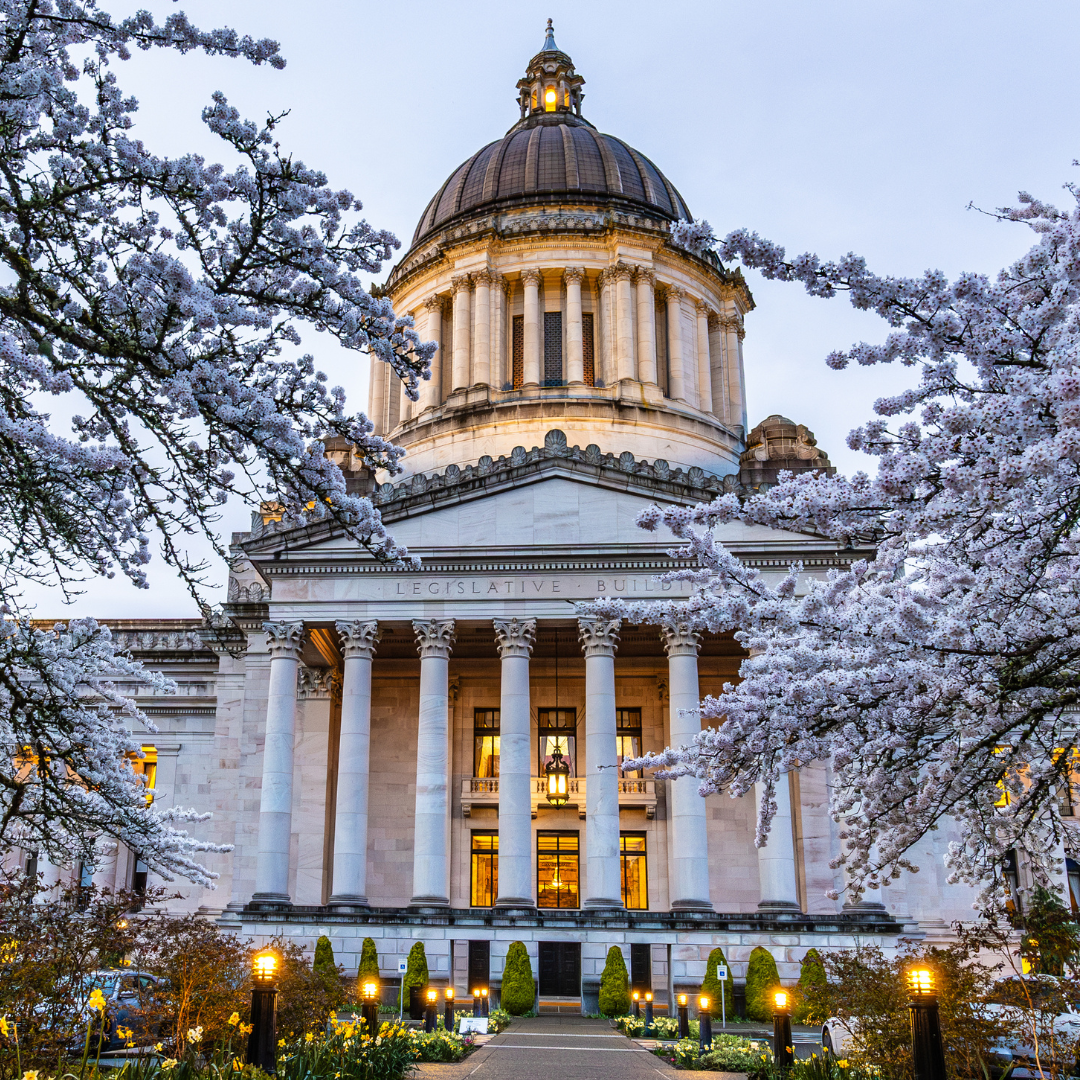
- $250,000 for Legislative Building repairs not covered by insurance claims. (This money is for repairs for damages caused during last year’s Legislative Building break-in.)
- $235,000 for minor works projects for critical capital preservation needs.
DISASTER & FLOOD RESPONSE
- $3.1 million is provided for grants to counties for the removal of debris in rivers and other waterways related to the December 2025 floods.
- $2 million is provided for grants to counties to evaluate county needs for flood response, preparedness, and prevention.
- $464,000 is provided to Burpee Hill Road landslide recovery (39th District).
- $1.545 million is provided to Carlisle Lake Dam safety improvements (20th District).
EDUCATION
K-12 and early learning
- $71.1 million for small district and state-tribal education compact (STEC) schools modernization program.
- $21.2 million for school construction assistance program (SCAP).
- $13.9 million in new spending for school seismic safety grants.
- $5.4 million is provided for distressed schools:
- Eatonville High School – West retaining wall and access.
- Eatonville High School – South retaining wall improvement
- Finley School District HVAC
- Whitworth Orca K-8 School roof replacement.
- $3.78 million for SCAP enhancement program pilot.
- $2.5 million for Healthy Kids-Healthy Schools, with the funding used for grants to support lead remediation.
Higher education
- Washington State University receives funding for:
- Minor works for preserving and improving campus facilities ($6 million).
- Cooling and electrical upgrades to Ensminger Pavilion ($1.5 million).
- Spokane Team Health Education Building renovation ($7 million).
- WSU Creamery lighting and equipment replacement ($1 million).
- Virtual fencing grants to enhance climate resiliency ($500,000).
- Central Washington University receives funding for its electrical feeder line to support the growth of campus and geothermal energy ($1.49 million).
- Eastern Washington University receives $4 million for for minor works to preserve and improve campus facilities and $7.134 million for the EWU Large Solar Array.
- Western Washington University receives funding for:
- Minor works for preserving and improving campus facilities ($2.15 million).
- Preventative maintenance for building system repairs ($500,000).
- Community and technical college system:
- Cascadia Community College: CC5 Gateway Building ($5 million).
- Lower Columbia College: David Story Field improvements ($3 million).
- Spokane Community College: Main Building renovation of east wing ($25 million).
- Seattle Central EcoDistrict Decarbonization ($11 million).
- Community and Technical College Building tune-up program ($2 million).
HOUSING & LOCAL INFRASTRUCTURE
Affordable housing
•With affordable housing still a challenge for many Washingtonians, the supplemental capital budget provides strong funding for housing needs.
•It has $200 million for housing and homelessness.
- $123.3 million is allocated from the Housing Trust Fund for housing projects in both western and eastern Washington.
- $77 million is directed to other housing programs.
Local infrastructure
- $30.507 million is provided for new 2027 local and community projects, with over 118 different projects receiving funding across Washington.
LAW ENFORCEMENT
- Over $1 million is allocated for Pasco Regional Police Academy improvements, including modernizing academy facilities and expanding usable space.
- $350,000 for the Washington State Criminal Justice Training Commission’s Burien campus indoor shooting range.
- $252,000 for the Criminal Justice Training Commission’s ADA upgrades at its Burien campus.
WATER SUPPLY
- $8.977 million is provided for statewide water conservation projects, including:
- Kennewick Irrigation District main canal lining.
- Kittitas Reclamation District South.
- Mill Creek passage – 3rd to Colville.
- Roza Canal floor replacement.
- Roza Canal sealing project.
- Touchet River mile 42.
- Waynita Creek restoration.
- Water system efficiency leak detection and repairs.
- $16.105 million goes to local and water-infrastructure projects, including:
- 4th Street NW stormwater improvement.
- Algona water system improvements design.
- Alice Bay tidegate replacement.
- Bradshaw pump station modernization.
- Chehalis River irrigation project.
- Columbia Grange 87 water well project.
- Hannah Heights water supply.
- Lorenzan Creek daylighting and fish passage.
- Medical Lake wastewater treatment plant ultraviolet.
- No Name Slough tidegate replacement.
- Othello water supply.
- Oxbow Basin study.
- Port Orchard water system consolidation.
- Scatter Creek irrigation project and pipeline project.
- Skagit District 15 irrigation project.
- Skookumchuck River irrigation fish screen project.
- Skookumchuck River water conservation.
- Snoqualmie Pass fire and rescue emergency communications.
- Southwest Washington Fairgrounds surface and drainage improvement project.
- Tumwater Brewery District planned action environmental impact statement.
- Washtucna water supply improvements.

Capital Budget
Ranking Republican on the Capital Budget: Sen. Mark Schoesler, 9th LD
The capital budget invests in long-term physical infrastructure across the state. It funds the construction, renovation, and repair of public buildings and facilities, including schools, universities, behavioral health facilities, housing projects, water systems, and other community assets.
Transportation Budget
Ranking Republican on the Transportation Budget: Sen. Curtis King, 14th LD
The transportation budget supports the state’s roads, bridges, ferries, and transit systems. It funds highway construction and preservation, ferry operations, public transportation grants, and transportation safety projects to help move people and goods efficiently and safely throughout the state.
OVERVIEW
- Washington’s highways and roads face problems, including a long backlog of projects needed to preserve and maintain roads and thousands of bridges.
- The final supplemental transportation budget passed by the Legislature is a bipartisan plan that focuses on preservation and maintenance, with bonding and no increase in the gas tax. This budget takes a step forward in addressing the challenges of Washington’s transportation system while being balanced over the next six years.
- Many of our highways and bridges are aging and in need of repairs. This budget will help repair our highway infrastructure while creating thousands of good-paying jobs.
- This budget also provides funding to help repair damage from last December’s flooding, with $15 million for state highway recovery and $45 million for local highway recovery ($30 million for county roads and $15 million for local roads).
FUNDING
- The supplemental transportation budget provides an additional $1.2 billion in funding over the $15.5 billion that was in the two-year budget approved by the Legislature last year, for a total of $16.7 billion for the biennium. The budget is balanced over six years.
- The state supplemental budget was passed several weeks after the February revenue forecast shows that state transportation revenue is down $101 million compared to the November 2025 forecast.
- The supplemental budget relies on $800 million in new bond sales to be used on state highway improvement projects over the next six years, which will free up cash to be used on preservation projects.
PROJECTS
Preservation and maintenance
- $500 million in different bonds will be used to finish the Highway 520 Bridge project over Lake Washington, with that money paid by tolls from that bridge.
- The budget provides an additional $40 million for maintenance for the 2025-27 budget, and an additional $80 million in future biennia.
Disaster relief
- The supplemental budget provides $30 million as a loan to the County Road Administration Board (CRAB) for county road disaster relief, and it provides $15 million as a loan to the Transportation Improvement Board (TIB) for city disaster relief. These moneys are expected to be paid back by federal disaster relief funds. The loans will be forgiven if no federal money appears.
Ferries
- Increases spending for preserving the state ferries system by $4 million in 2025-27, by $8 million in 2027-29 and by $16 million in 2029-31. Of the overall ferry preservation and maintenance funding, $2 million is spent to create a dedicated team to fix ferry boats when they break down, expanding the Bainbridge Island maintenance facility to fix unexpected breakdowns.
- $31 million is going toward electrifying the Seattle, Bainbridge and Clinton ferry terminals.
Dredging
- The supplemental transportation budget provides $10 million for Columbia River dredging of the federal navigation channel downriver from Vancouver, along with $5 million in the supplemental capital budget for a total of $15 million for Columbia River dredging.
State Patrol
- Provides $2.7 million for State Patrol trooper training. This amount should help the State Patrol reach full staffing for the first time in more than a decade.